
AI Studio
AI Studio
DataDios AI Studio offers a text-based interface to interact with any data source, eliminating the need for users to know various SQL syntaxes. Additionally, DataDios AI Studio automatically generates rich visual interfaces for queried data, which can be exported or emailed.
Universal Semantic Search
The DataDios platform provides a universal full-text and semantic search capability, enabling searches across metadata, governance data, data quality rules, and performance data.
Workload Analyzer
Workload Analyzer
Access all your data in one location and use an intuitive text-based chatbot to answer all your data-related questions.
SmartDiff
SmartDiff
SmartDiff ensures an easy, efficient, and secure way to validate migrated data across private and public cloud platforms. DataDios SmartDiff is built on Root Cause Analysis, Clustering and Data Transformation architecture enables automated Data Validation Post Migrations, Cause analysis and revealing the patterns.
Data Explorer
Data Explorer
Connect to any supported data source, and DataDios Data Explorer will instantly visualize metadata, operational data, governance data, and performance data—all in one place.
Metadata Synchronization
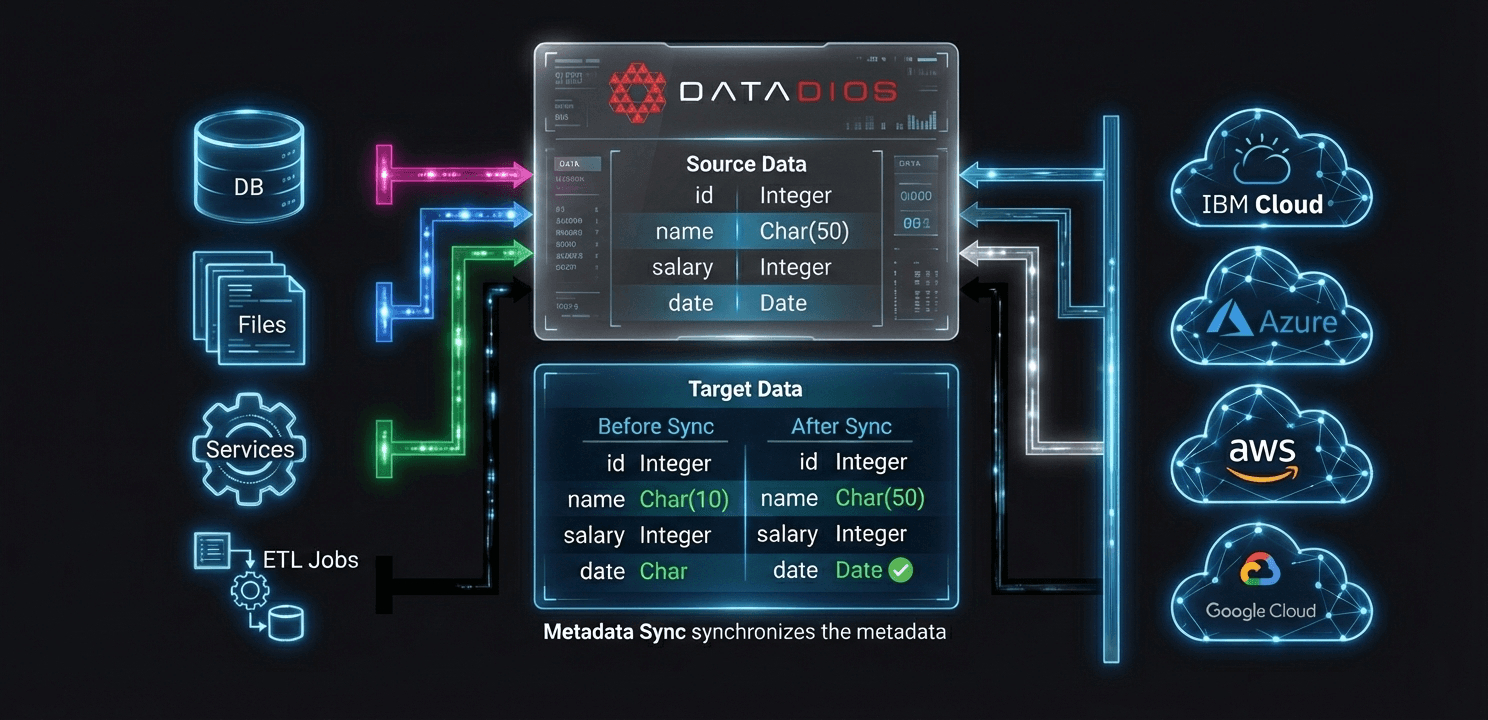
Metadata synchronization is important in distributed computing environments where data is stored and processed across multiple systems or in cutting edge technologies . In such environments, ensuring consistent metadata across all nodes is essential for enabling efficient data access, querying, and processing.
Meta Vision
Meta Vision
Connects instantly to any data source using the in-built data source implementation support. Works well with any database schema and connects using well defined REST API web services. Capable of Data Exploration, Data Migration and Data Synchronization from a single UI.
Data Quality Dashboard
Simply export the data from any data source in seconds. Users get the option to export as PDFs, Excel spreadsheets or CSV.
AI Studio Icon
Metadata Synchronization
Metadata synchronization is important in distributed computing environments where data is stored and processed across multiple systems or in cutting edge technologies . In such environments, ensuring consistent metadata across all nodes is essential for enabling efficient data access, querying, and processing.
Metadata Synchronization
Benefits

Full Migration Metadata (First Time)

This feature allow users to transfer metadata objects, such as tables, columns, indexes, and relationships, from one system to another while ensuring consistency and integrity.

Version Control

This Feature allows users to track changes to metadata over time and manage migrations using versioning features. This ensures traceability.

Automated Synchronization (Scheduler)

This feature helps users to schedule workflows to synchronize metadata automatically.

Migrate only Deltas

This feature transfers or applies only the changes (deltas) between two sets of metadata, rather than transferring the entire metadata structure.

Schema Comparison

This feature compare the metadata structures between two environments and identify differences.

Delta Finding

This feature identifies and highlights the differences or changes between two sets of metadata.

Monitoring and Reporting

This feature track the status of synchronization tasks, provide real-time visibility into synchronization processes, and generate reports on synchronization activities, errors, and performance metrics.

Data Lineage and Impact Analysis

Capabilities for tracing the lineage of metadata objects to understand their origins and how they are used in data flows, as well as performing impact analysis to assess the potential effects of metadata changes on downstream systems or processes.

Frequently Asked Questions
What is metadata synchronization?

Metadata synchronization is the process of keeping metadata such as tables, columns, indexes, relationships, and schemas consistent across multiple systems or environments. It is especially important in distributed and modern data architectures where data is stored and processed across many platforms.

Why is metadata synchronization important in distributed environments?
What is "Full Migration Metadata (First Time)" in metadata synchronization?
How does version control help with metadata synchronization?
What is automated metadata synchronization (scheduler)?
What does "migrate only deltas" mean in metadata synchronization?
How does delta finding help in metadata synchronization?
What is schema comparison in metadata synchronization?
How do data lineage and impact analysis support metadata synchronization?