
Universal Semantic Search
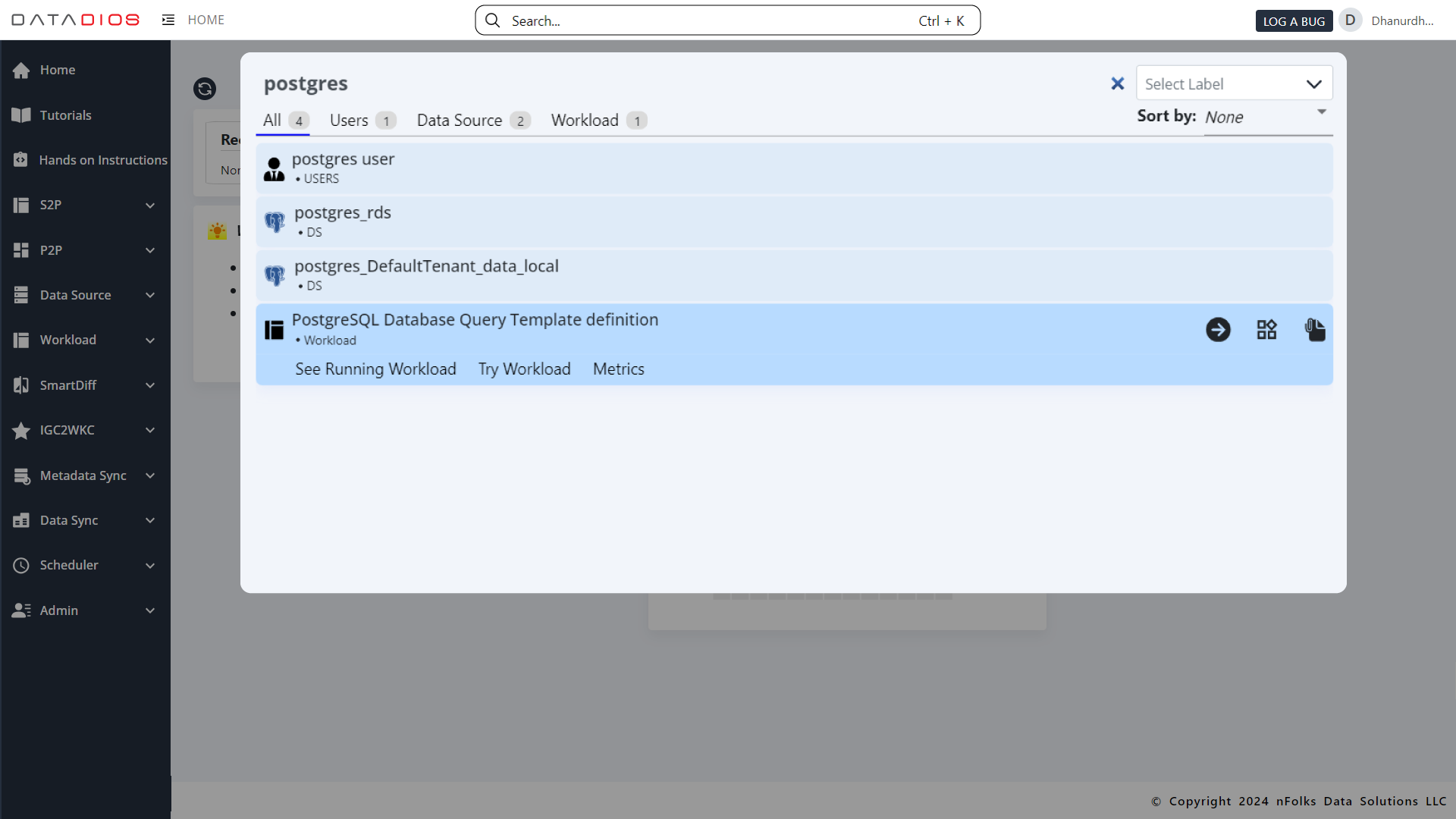
Universal Semantic Search (USS) provides search capabilities for all the data stored in DataDios. It leverages Elasticsearch with vector embeddings, to provide efficient and relevant search results.
How It Works
1. User Selection for USS:
Admins enable USS for specific users within a tenant, granting them access to advanced search features.
2. Vector Embeddings:
-
USS relies on vector embeddings sourced from either the default DataDios or a custom data source.
-
These embeddings transform textual data into numerical vectors, enabling semantic search that understands the context and meaning of queries.
3. Feature Loading
-
Features, including vector embeddings, are loaded into Elasticsearch, making them available for search operations.
-
Elasticsearch indexes these features to provide quick and accurate search results.
4. Search Functionality:
-
An API determines if the search box should be enabled in the UI for specific users.
-
Elasticsearch processes search queries using the loaded vector embeddings, delivering precise and context-aware search results.
Benefits
Customization and Flexibility
Offers flexibility in integrating different data sources for vector embeddings, allowing for a customized and adaptable search solution.Provides a more relevant and context-aware search experience, enhancing the overall user experience.
Vector Embeddings
Improves search accuracy and relevance by understanding the context and meaning behind queries, resulting in more precise search results compared to traditional keyword-based search.
Efficient Data Management
Supports large volumes of data and high query loads, allowing the system to scale seamlessly as the user base and data grow.Ensures efficient data retrieval and enhances the performance of search operations, providing users with instant and relevant search results.
Real-Time Search
Ensures users receive instant and up-to-date search results, enhancing the responsiveness of the application.
Features
Customization and Flexibility
Admins can tailor USS for specific users, providing a personalized search experience.
Vector Embeddings
Utilizes vector embeddings for semantic search capabilities.
Efficient Data Management
Built on Elasticsearch’s distributed architecture for horizontal scalability.Manages and indexes data for quick and accurate search results.
Real-Time Search
Provides real-time indexing and search capabilities.
FAQs
What is Universal Semantic Search (USS) in DataDios?
Universal Semantic Search (USS) is a search capability in DataDios that works across all data stored in the platform. It uses Elasticsearch with vector embeddings to return relevant, context-aware results instead of simple keyword matches.
How does Universal Semantic Search differ from traditional keyword search?
Traditional keyword search looks for exact word matches, while USS uses vector embeddings to understand the meaning and context behind a query. This semantic approach returns more accurate and relevant results, even when users phrase queries differently or use related terms.
How do admins enable Universal Semantic Search for users?
Admins can enable USS for specific users within a tenant. When enabled, those users see an advanced search box in the UI and can access semantic search features powered by Elasticsearch and vector embeddings.
What role do vector embeddings play in USS?
Vector embeddings transform textual data into numerical vectors that capture semantic meaning. USS uses these vectors to compare queries and documents based on similarity, allowing the search engine to understand context and intent rather than just matching keywords.
Where do the vector embeddings in USS come from?
USS can use embeddings from the default DataDios source or from a custom data source. This flexibility allows organizations to integrate their preferred embedding models and tailor semantic search behavior to their specific data and use cases.
How are features and embeddings loaded into Elasticsearch?
Features including vector embeddings are loaded into Elasticsearch, where they are indexed for search operations. Elasticsearch’s indexing and retrieval capabilities make searches fast, scalable, and accurate, even over large volumes of data.
How is the search box controlled for different users?
An API determines whether the USS search box should be enabled in the UI for a given user. If USS is enabled for that user, the search box appears and queries are routed through Elasticsearch using vector embeddings to deliver semantic results.
How does USS handle large volumes of data and queries?
USS is built on Elasticsearch’s distributed architecture, which supports horizontal scalability. This allows the system to handle large datasets and high query loads while maintaining quick and reliable search performance.
What are the main benefits of using Universal Semantic Search?
Key benefits include more relevant and context-aware search results, the ability to search across diverse data stored in DataDios, scalability to large data volumes, and real-time responsiveness. Together, these benefits significantly improve the overall search experience for users.
How does USS improve user experience compared to basic search?
By understanding intent and context through vector embeddings, USS reduces noise and surfaces the most meaningful results first. This makes it easier for users to find what they need quickly, even when they’re not sure of exact field names or keywords.
How does Universal Semantic Search support efficient data management?
USS is designed to manage and index large amounts of data efficiently. Elasticsearch optimizes storage and retrieval, while vector-based search ensures that even large indexes can be queried quickly with accurate, relevant results.
Does Universal Semantic Search support real-time search?
Yes. USS leverages Elasticsearch’s real-time indexing and search capabilities. As new data and embeddings are added, they become searchable almost immediately, ensuring users always get up-to-date results.