
Data Quality Dashboard
Data quality refers to the overall utility, reliability, and accuracy of data for its intended use. High-quality data is essential for making informed decisions, improving business processes, and driving innovation. Poor data quality can lead to erroneous conclusions, missed opportunities, and operational inefficiencies.
How It Works
Data Collection
Data is collected from various sources, such as databases, spreadsheets, and external data providers. The quality of the source data significantly impacts the final data quality.
Data Profiling
The collected data is examined to understand its structure, content, and relationships. This includes identifying missing data, duplicates, and outliers.
Data Cleansing
Errors and inconsistencies in the data are corrected through processes such as filling missing values, removing duplicates, and standardizing formats.
Data Enrichment
External data is added to enhance the completeness and accuracy of existing data. For example, adding geolocation data to customer records.
Data Validation
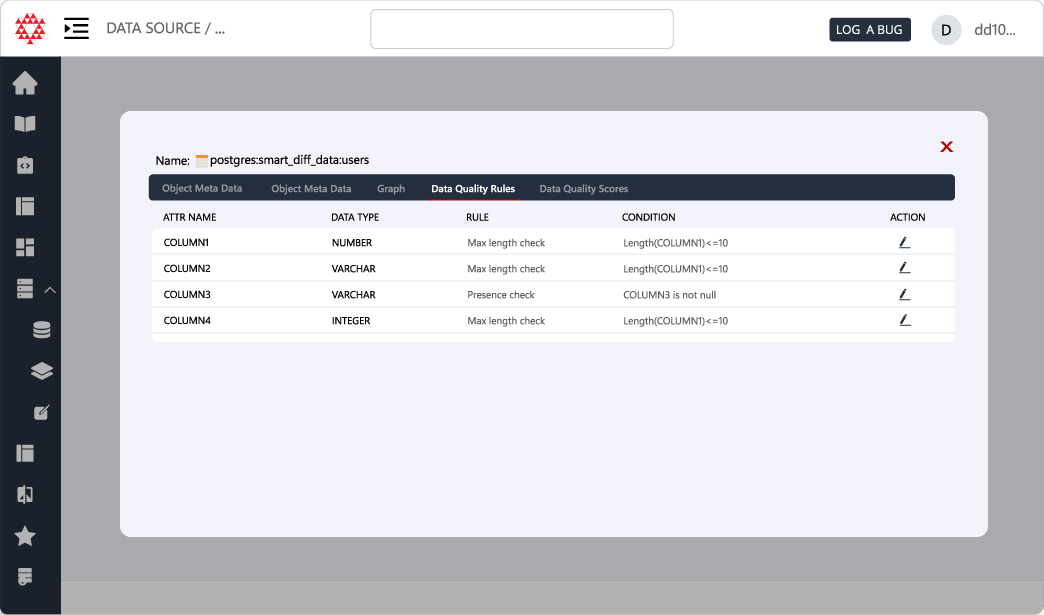
The data is checked against predefined rules or business logic to ensure accuracy and consistency. This might include ensuring that certain fields are mandatory or that numerical values fall within an expected range.
Data Governance
Ongoing processes and policies ensure that data quality is maintained over time. This includes regular audits, data stewardship roles, and data management tools.
Benefits
Better Decision-Making
High-quality data allows organizations to make informed, data-driven decisions, reducing the risk of mistakes.
Operational Efficiency
Clean, well-organized data reduces inefficiencies and errors, improving productivity and resource allocation.
Increased Revenue
Accurate data can reveal opportunities for new revenue streams, improved customer satisfaction, and better-targeted marketing.
Regulatory Compliance
Many industries have strict regulations around data handling and reporting. High-quality data helps ensure compliance with these rules.
Enhanced Analytics
With reliable data, organizations can extract meaningful insights from analytics and machine learning models, leading to better innovation and competitive advantage.
Features
Accuracy
Data should reflect the real-world entities or events it describes. Any inaccuracies can lead to misinformed decisions.
Completeness
All required data should be present without gaps. Missing data can distort analysis and conclusions.
Consistency
Data should be consistent across different systems and datasets. For example, customer information should be identical in both the sales and support databases.
Timeliness
Data should be up-to-date to be relevant for decision-making. Outdated information can lead to incorrect conclusions.
Uniqueness
Data should not be duplicated unnecessarily. Duplicate records can cause confusion and errors.
Validity
Data should conform to defined formats and rules. For example, a date field should only contain valid dates, and an email field should only contain valid email addresses.
Accessibility
Data should be easily accessible to those who need it, while being protected from unauthorized access to ensure privacy and security.
FAQs
What is the DataDios Data Quality Dashboard?
The DataDios Data Quality Dashboard is a centralized interface that helps organizations assess, monitor, and improve the quality of their data. It provides visibility into accuracy, completeness, consistency, and other key dimensions so teams can trust the data used for reporting, analytics, and decision-making.
What do we mean by “data quality”?
Data quality refers to the overall utility, reliability, and accuracy of data for its intended use. High-quality data is complete, consistent, timely, valid, unique, and accessible making it suitable for critical tasks such as analytics, reporting, and operational decision-making.
Why is data quality important for organizations?
High-quality data enables better decision-making, improves operational efficiency, supports regulatory compliance, and powers more reliable analytics and machine learning. Poor data quality, on the other hand, can lead to wrong conclusions, missed opportunities, higher costs, and inefficiencies across the business.
How does the Data Quality Dashboard collect data?
The Data Quality Dashboard collects data from multiple sources, including databases, spreadsheets, and external data providers. Because the quality of the source data directly affects the final output, the dashboard helps teams evaluate and improve these inputs as part of the overall quality process.
What is data profiling in the Data Quality Dashboard?
Data profiling is the step where collected data is examined to understand its structure, content, and relationships. The Data Quality Dashboard helps identify missing values, duplicates, outliers, and other issues so teams know where problems exist and how serious they are.
How does the Data Quality Dashboard support data cleansing?
The dashboard supports data cleansing by highlighting errors and inconsistencies and guiding processes such as filling missing values, removing duplicates, and standardizing formats. This ensures that downstream systems and reports work with clean, reliable data.
What is data enrichment, and how is it used in the dashboard?
Data enrichment involves adding external data to enhance the completeness and accuracy of existing records. For example, the Data Quality Dashboard can support processes like appending geolocation data to customer records, making datasets more useful for segmentation, targeting, and analytics.
How does the Dashboard validate data?
Data validation ensures that data conforms to predefined rules or business logic. In the Data Quality Dashboard, this can include checking that required fields are populated, numerical values fall within expected ranges, and formats such as dates or emails are valid.
What role does data governance play in data quality?
Data governance provides the ongoing policies, roles, and processes that keep data quality high over time. Through regular audits, data stewardship, and management tools, the Data Quality Dashboard helps organizations maintain standards, enforce rules, and align teams around trusted data.
What are the main benefits of using the Data Quality Dashboard?
Key benefits include:
-
Better decision-making through accurate, reliable data
-
Operational efficiency by reducing errors and manual rework
-
Increased revenue via improved customer insights and targeted marketing
-
Regulatory compliance through clean, well-governed datasets
-
Enhanced analytics with high-quality inputs for models and reports
Which data quality dimensions does the Dashboard focus on?
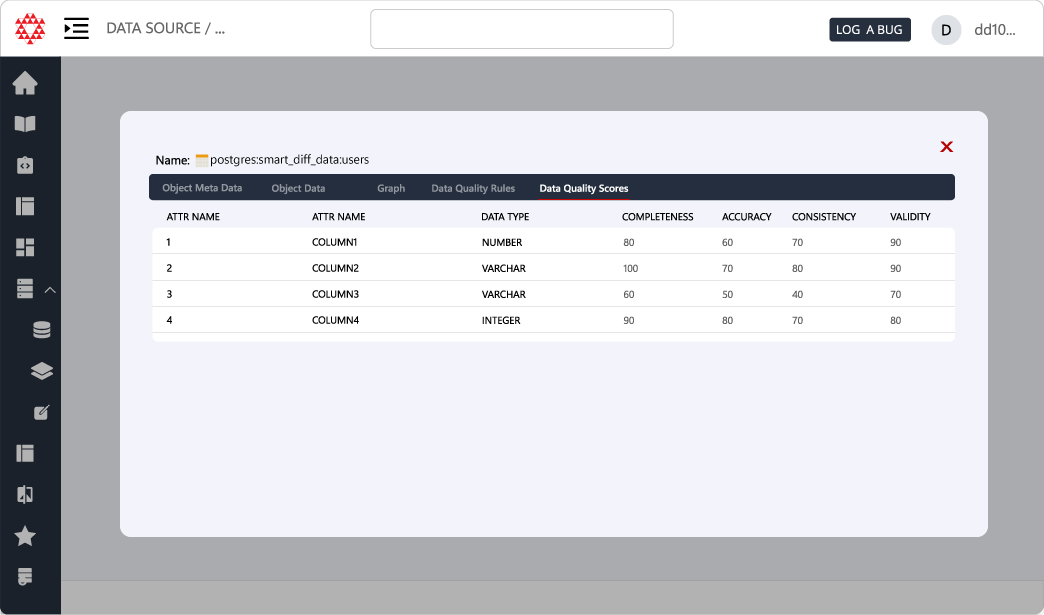
The Data Quality Dashboard focuses on core data quality dimensions, including:
-
Accuracy – Data reflects real-world entities and events
-
Completeness – Required fields and records are present
-
Consistency – Data is aligned across systems and datasets
-
Timeliness – Data is up-to-date and relevant
-
Uniqueness – Duplicate records are minimized or eliminated
-
Validity – Data conforms to defined formats and rules
-
Accessibility – Authorized users can access data easily and securely
How does the Data Quality Dashboard fit into the overall DataDios Platform?
The Data Quality Dashboard is part of the cloud-first DataDios Platform, which centralizes data, metadata, performance metrics, and governance information in one place. While other modules focus on exploration, workloads, or lineage, the dashboard specifically ensures that the underlying data remains accurate, reliable, and ready for use.